
The 2025 Deep Dive examined community ownership models in commercial real estate and drew 138 registrations at the DuSable Black History Museum and Education Center. The 2026 program shifts the lens from the community to the individual and the family, and asks a more direct question: what are the available paths into ownership, and what does each one require of the person considering it.
The program presents two parallel paths. The first is ownership of real estate. The second is ownership of an enterprise, including both franchise ownership and independent business ownership. Participants should leave able to answer two questions about each path:
● Is this path suited to me, given how I want to work and what I want to build?
● Is this path attainable from where I stand today, at my current career stage and capital position?
Every session is constructed to serve those two questions. Sessions that inspire without answering them do not belong on this agenda.
DDC Deep Dive: Ownership
Date: Thursday, August 6, 2026
Location
Hyde Park Labs, 5th Floor, 5207 South Harper Avenue, Chicago, Illinois
Time
8:00 AM – 1:00 PM
Format
Half-day breakfast forum with panels, a fireside conversation, and
a networking reception
Co-presented by
The DDC Network and Community Desk Chicago
| Time | Session |
|---|---|
| 8:00 – 9:00 AM |
Breakfast and Networking
|
| 9:00 – 9:30 AM |
Opening Keynote
Jemal King — "The 9-to-5 Millionaire"
How working professionals build wealth through real estate investment. |
| 9:30 – 10:20 AM |
Panel 1: Building Wealth Through Real Estate
Joint venture structures, GP promote economics, scaling portfolios,
refinancing strategies, and development pipelines.
Plante Moran Contacts
|
| 10:20 – 11:10 AM |
Panel 2: Capital Access, Entrepreneurship & Ownership
Capital stack structures, predevelopment capital, lender and investor relationships,
and building credibility with capital providers.
|
| 11:10 – 11:50 AM |
Fireside Conversation: Generational Wealth in Practice
Members of the Bridgeman family on franchise ownership,
real estate as a wealth vehicle, and family succession.
|
| 11:50 – 1:00 PM |
Networking and/or Lunch
|
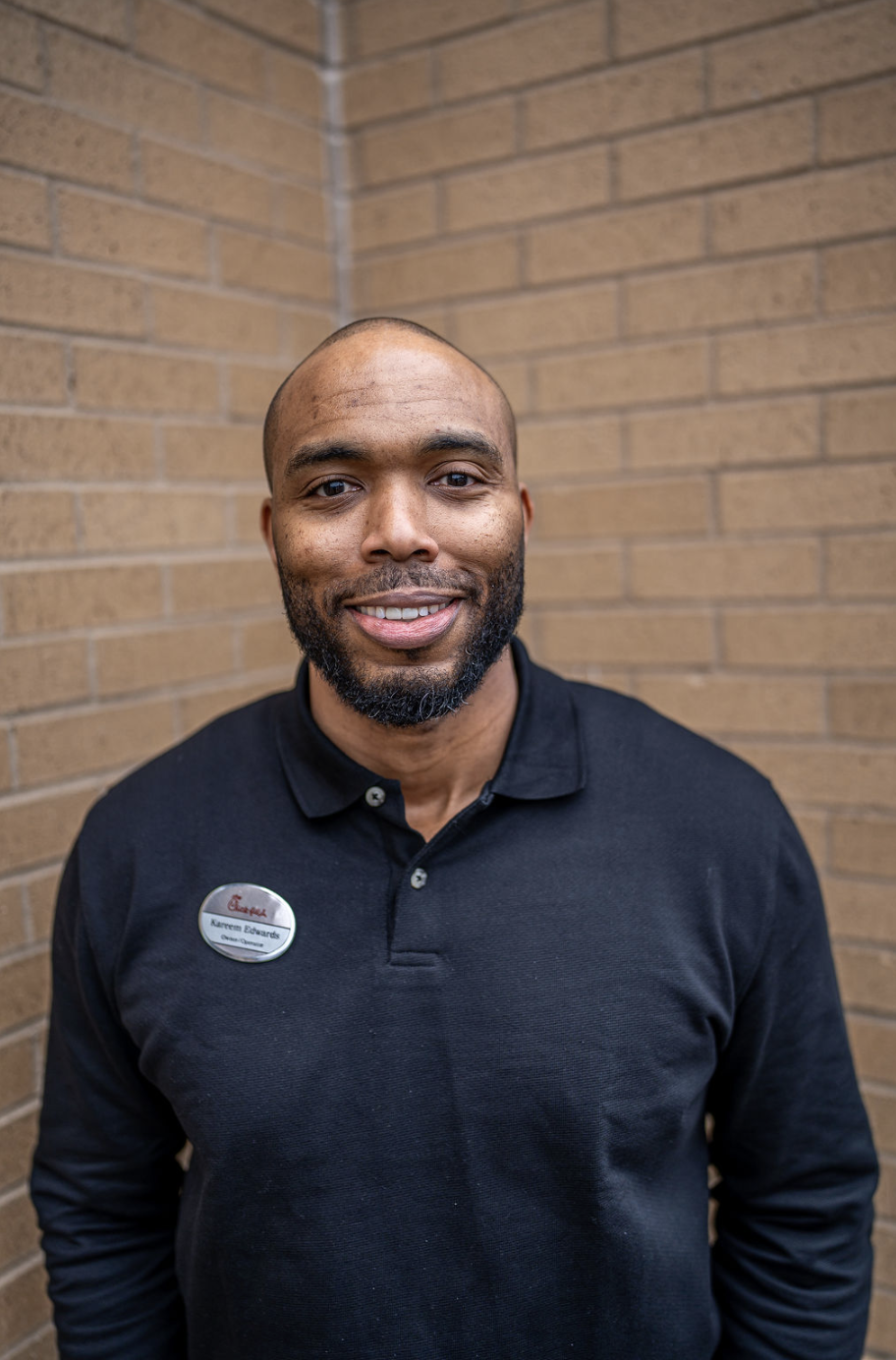
Kareem Edwards
Owner and Operator, Chick-fil-A South Loop | Chicago, Illinois
Kareem Edwards is an entrepreneur and community-focused business leader. A native of Far Rockaway, Queens, he is a first-generation scholar who majored in mathematics at DePauw University and began his career on Wall Street at Lehman Brothers. Crain's Chicago Business recognized him in its inaugural "20 in Their 20s" cohort. In 2013 he left financial services for an MBA at the University of Michigan Ross School of Business, where Poets and Quants named him a 2015 Top MBA to Watch. He subsequently led the Breakthrough Innovation team at Kraft Heinz, launching the company's first platinum product, and later worked at Google partnering with e-commerce companies on brand development. In January 2021 he became the franchise owner of Chick-fil-A South Loop, where he applies his cross-industry background to team development, community service, and business performance.
Program relevance: Kareem's path is the corporate-career-to-franchise-ownership path. His session addresses the requirements of becoming a franchisee, how the transition was financed, what wealth actually looks like inside a franchise, and what comes next.
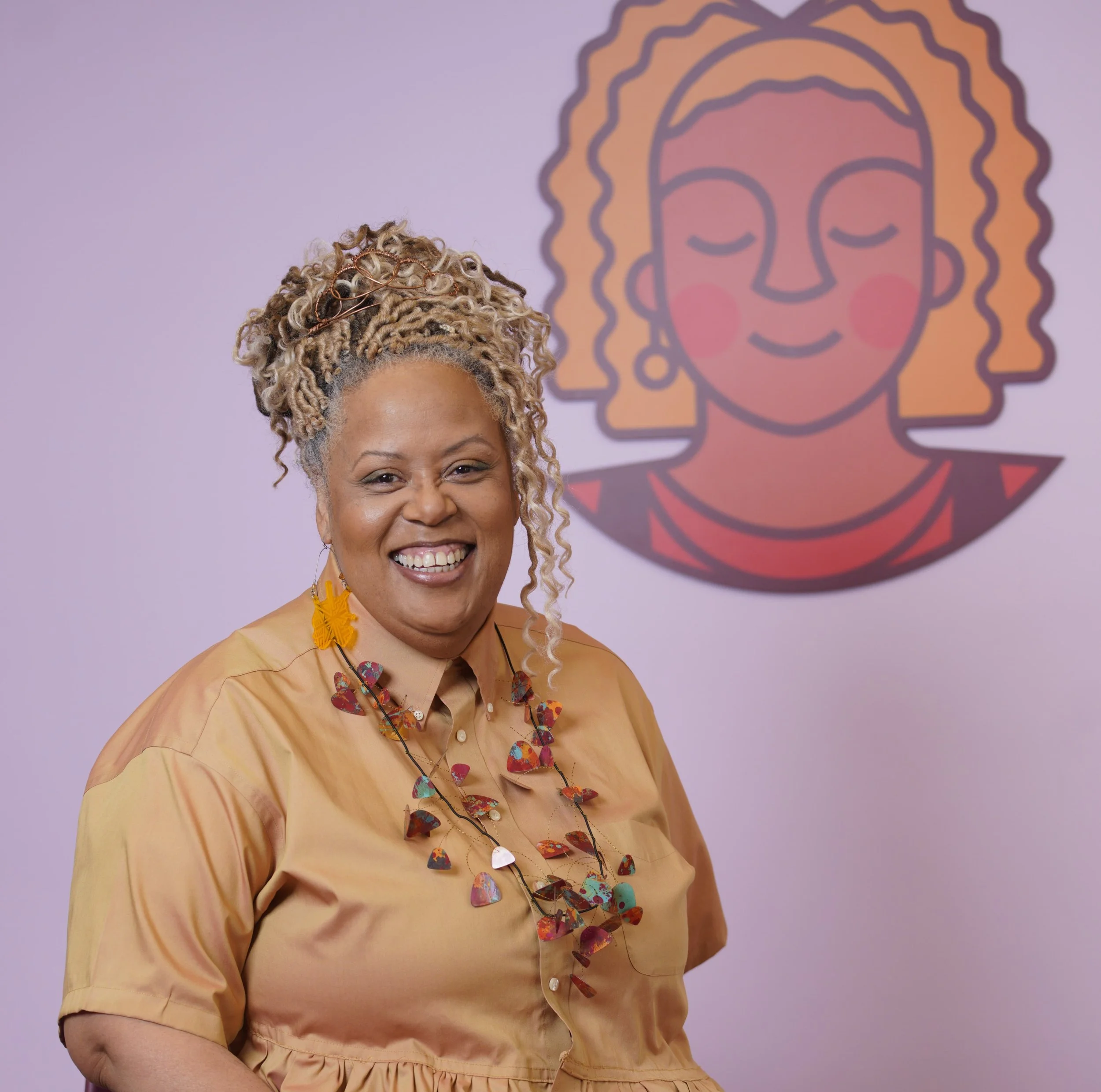
Stephanie Hart
Owner and Operator, Chick-fil-A South Loop | Chicago, Illinois
Kareem Edwards is an entrepreneur and community-focused business leader. A native of Far Rockaway, Queens, he is a first-generation scholar who majored in mathematics at DePauw University and began his career on Wall Street at Lehman Brothers. Crain's Chicago Business recognized him in its inaugural "20 in Their 20s" cohort. In 2013 he left financial services for an MBA at the University of Michigan Ross School of Business, where Poets and Quants named him a 2015 Top MBA to Watch. He subsequently led the Breakthrough Innovation team at Kraft Heinz, launching the company's first platinum product, and later worked at Google partnering with e-commerce companies on brand development. In January 2021 he became the franchise owner of Chick-fil-A South Loop, where he applies his cross-industry background to team development, community service, and business performance.
Program relevance: Kareem's path is the corporate-career-to-franchise-ownership path. His session addresses the requirements of becoming a franchisee, how the transition was financed, what wealth actually looks like inside a franchise, and what comes next.
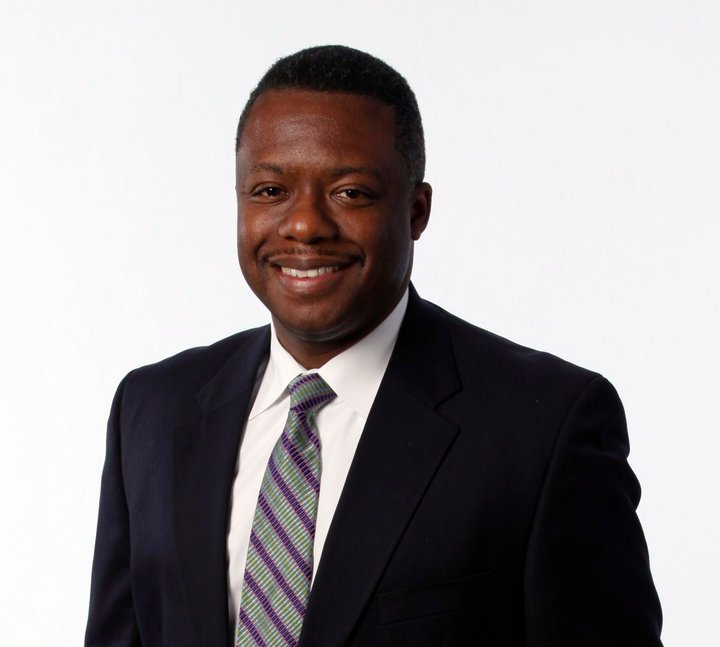
James Hill III, CPA
President and Founder, ICL, LLC | Chicago, Illinois
James Hill III is the president and founder of ICL, LLC, a Chicago-based professional services firm specializing in audit, tax, and consulting. He began his career at Arthur Andersen in Chicago, serving closely held corporations across consumer products, professional services, and nonprofit industries, and contributed to continuing professional education for the firm's Not-For-Profit Industry Group. He serves or has served on the boards of the Sprague Foundation, the Marwen Foundation as board member and former board chair, and Chicago Commons Association as board member and former board chair, as well as the Organization of Black Aerospace Professionals Advisory Board, the National Association of Black Accountants Audit Committee, and Rainbow PUSH as Audit Committee Chair. He holds a Bachelor of Science in accounting from North Carolina Agricultural and Technical State University and an MBA from the University of Michigan, and is a Certified Public Accountant and a Certified Sommelier.
Program relevance: James is the fireside conversation. His father, James Hill Jr., founded one of Chicago's pioneering African American CPA firms, and James III left Arthur Andersen at his father's request to help lead the family business. The transition proved far more complicated than anticipated, James III ultimately left the firm, and the practice was later sold to Mitchell and Titus rather than transferred to him. The business continued; the family succession did not unfold as envisioned. That is the most valuable content in this program, because it is the part of generational wealth that convenings routinely omit. He also supplies the structuring and tax lens the agenda otherwise lacks: how ownership is held, how earnings are taken, and what must be true for an enterprise to transfer rather than simply close.
Panel Two — Discussion Framework
The following question set was sent to Kareem Edwards on June 16 and he confirmed it on the same day. A parallel set should be prepared for Stephanie Hart so that both panelists answer the same underlying questions through their different models.
Background and professional path prior to ownership.
What led to the decision to own.
Why this particular business or brand, and what the requirements to enter were.
The mechanics of the journey into ownership, including how the equity was assembled.
What wealth looks like as an owner, in concrete financial terms.
Benefits, rewards, challenges, and lessons learned.
What comes next on the wealth-building path.
For Stephanie Hart, two additional questions are recommended: how the acquisition of the Cupid Candies facility was financed, and how she evaluated growth through a second location against other uses of capital. Timing note: two panelists and a moderator in fifty minutes supports the full question set with time for two or three questions from the room. Reserve the final eight minutes for audience questions.
Fireside Conversation — Framing and Sensitivity
The fireside is the most substantive session on the agenda and requires the most careful handling. The conversation is built on the Hill family succession: a founder who built a pioneering firm, a son who left a major accounting firm at his father's request to help lead it, a transition that did not resolve, and a practice ultimately sold outside the family. Most convenings on generational wealth present only the successes. This session presents what it actually costs when the emotional work of transition is not done alongside the financial work.
Proposed questions:
What does successful succession planning actually require, beyond the legal and tax documents?
How does a founder prepare emotionally to transition leadership, and what are the signals that a founder is not ready?
How do families separate business decisions from personal relationships, and what happens when they cannot?
What can an owner do today to preserve both wealth and family relationships across generations?
From the adviser's seat, what patterns recur in families that transition successfully, and what is present in those that do not?
Handling. This is James Hill's personal and family history, and it involves his late father's decisions and the relationship between them. Two safeguards are required before any public use. First, James must approve in writing how the session is described in any external material, and the family detail should not appear in registration copy, social assets, or the printed agenda without that approval. Second, the internal context circulated on July 16 was written for planning purposes among Katrina, Ja'Net, and Michelle, and should not be forwarded, excerpted, or reused in external communications. Role assignment. James offered either to share his story or to serve as a moderator. The recommendation is that he share his story, with Jacques Philoctete conducting the conversation. A private banker who advises multigenerational families on exactly this transition is the right interviewer, and the pairing lets James speak as a participant rather than manage the session while telling his own history.
Operational Notes
Room configuration: theater or crescent-round seating for 130, with a staged panel setup of four to five chairs and a low table.
Audio visual: four wireless microphones minimum, projection for sponsor recognition and session titles, and two comfortable chairs with a low table for the fireside.
Sponsor recognition — contractual. The Chicago Community Trust was committed presenting sponsor recognition in the funded application. The following are obligations, not courtesies: logo placement on all event marketing materials, including digital flyers, email communications, and social media graphics; logo placement on event signage and digital welcome screens; verbal acknowledgment by the hosts at both the opening and the closing; recognition in post-event recap communications to all attendees and partner networks; and inclusion in any press or media coverage.
Hyde Park Labs and CBRE recognized as venue partners on registration signage and the opening and closing slides.
Photography confirmed as a required deliverable for sponsor reporting and future grant applications.
Digital program only. Printed materials limited to directional signage and a one-page agenda card.
Speaker hospitality: green room access, parking validation, and a pre-program briefing at 8:15 AM for all panelists and moderators.
Catering logistics: Medici delivers in fifteen-minute windows beginning at 7:30 AM, which is the earliest possible arrival for an 8:00 AM start. Room access, setup, and service tables must be complete by 7:30. Amazon beverage delivery must arrive at least one day prior, with a confirmed receiving point and storage at the venue, and ice must be sourced separately.
Janitorial services are billed to The DDC Network as a condition of the donated space provided by Hyde Park Labs and CBRE.
Registration is ticketed at twenty-five dollars through Eventbrite.
Open Items
Jacques Philoctete. Follow-up owed. He is proposed as the fireside interviewer, which is the highest and best use of his practice. This is now the single most consequential outstanding confirmation on the agenda.
Panel One. One confirmed panelist. A moderator and a second panelist are required. Mary Ellen Drake, an initial shareholder in the Home Depot ground lease, is the leading candidate for the second seat and would introduce a shared and collective ownership structure alongside Jasmine Shaw's for-sale infill model. She has not yet been approached.
Jemal King and the Bridgeman family. Both remain under active outreach. Neither is on the agenda, and the opening remarks slot has been absorbed into an extended welcome so the program stands complete without them. If either confirms, the recommended placement is a twenty-minute opening keynote from 9:05 to 9:25, with Panel One shifting to 9:25 and the break shortening by five minutes. That change should be made only on a written confirmation, not on an expression of interest.
Jim Reynolds. Not pursued. The decision was that he has appeared on a substantial number of panels recently. The Chicago Community Trust has indicated it is comfortable with the change from the funded application.
Catering. Continental breakfast from Medici on 57th, beverages via Amazon delivery, and miniature cupcake trays from Brown Sugar Bakery, which Stephanie Hart has confirmed. Detailed pricing is on the Catering Detail tab of the budget. Two items require attention before ordering: the Illinois tax exemption cannot be claimed on The DDC Network's account while its determination is pending, and the Brown Sugar Bakery purchase is a related-party transaction with a confirmed speaker that should be documented at fair market value.
Fireside approval. Written approval from James Hill on external description of the session, per Section 6.
Program title. Settled as "Ownership: Pathways to Generational Wealth." The panelist profiles workbook still carries the earlier "A Pathway" form and should be corrected so that no asset is built from the superseded title.
Chicago Community Trust funds. The five thousand dollar award, Grant ID C202600255, was made to Community Desk Chicago with a term of May 1, 2026 through April 30, 2027. A written split of which expense lines each organization pays is required before vendor commitments are made. Confirm with Ja'Net DeFell that the DocuSign grant agreement has been executed and returned, since payment does not begin until the Trust receives it.
Grant scope notification. The funded application described a Juneteenth forum on June 17, 2026, with an opening keynote by Jemal King, a fireside with members of the Bridgeman family, and a closing keynote by Jim Reynolds of Loop Capital. The program is now August 6 with an entirely different lineup. The August date falls within the grant term, so this is a notification rather than a problem, but it should be documented in writing to the Trust before the event rather than surfacing in the final report. As the grantee, Community Desk Chicago must send it. Iona Calhoun-Battiste is the contact named in the award letter.
Funding gap against the funded scope. The application stated a total event budget of fifteen thousand dollars against a ten thousand dollar request. The award came in at five thousand. With registration capped at 130 at twenty-five dollars, total revenue is approximately seven thousand nine hundred dollars. Either the program scope contracts to that ceiling, or additional sponsorship is secured. The application named BMO, JPMorgan Chase, and Wintrust as prospects under exploration; their current status should be confirmed.